Sandustry Smelter Building Guide
Smelt Copper Ore into Liquid Copper and manage heat sources for power brick production in late-game Sandustry.
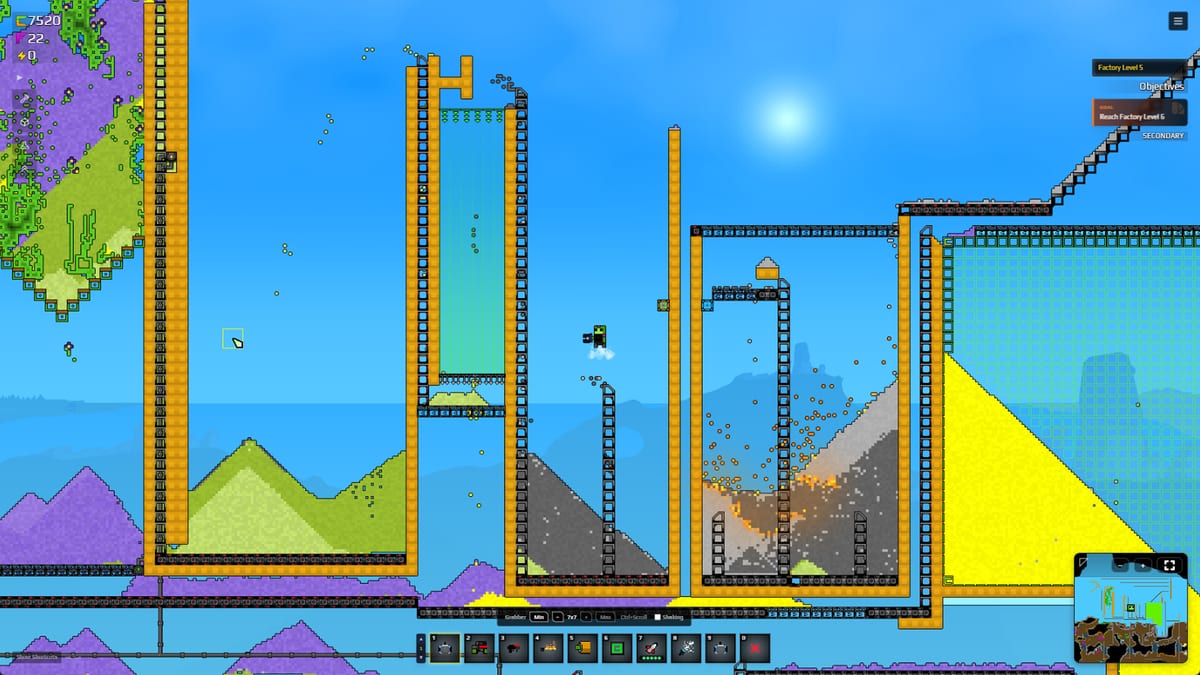
The Smelter is a building in Sandustry that processes solid materials into their liquid forms using heat. While most early-game processing relies on physical separation through Shakers and Filters, the Smelter introduces thermal transformation — converting raw ores into molten materials that can be piped, pumped, and cast into useful forms. This makes the Smelter essential for late-game production chains that involve copper processing and power generation.
Primary use: Copper smelting
The Smelter’s primary function in late-game Sandustry is processing Copper Ore into Liquid Copper. Copper Ore cannot be melted with a Flamethrower alone — it requires the sustained, concentrated heat of a Smelter building to reach melting temperature. Once molten, Liquid Copper flows through pipes to casting stations where it solidifies into Power Bricks that store Florinol energy for portable power. This makes copper one of the most important late-game resources for players who want sustainable energy for tools, drones, and mobile factory operations.
How the Smelter works
The Smelter consumes heat from adjacent lava tiles or from a dedicated heat source. Heat must be continuously supplied while the Smelter is processing material — if the heat source is removed or cools down, the Smelter stops producing output. This creates an important design constraint: your copper smelting operation must be positioned near a reliable heat source, or you must invest in alternative heating solutions.
Position Smelters along lava veins for natural heat, or plan a sustainable heat delivery system using thermal buffers and heat redistribution networks. Understanding heat flow in your factory is critical for maintaining consistent copper production.
Smelter mechanics
The Smelter operates on several key mechanical principles that affect how you design your production lines:
- Input: Solid materials like Copper Ore enter the Smelter through a dedicated input slot
- Heat requirement: Continuous heat from lava tiles or from an attached heat source
- Output: Liquid form of the input material flows out through the Smelter’s output
- Processing time: Smelting takes a set amount of time per unit of ore, affected by heat supply
- Heat threshold: The Smelter must reach a minimum temperature before it begins producing output
Setting up a copper smelting line
Building an efficient copper smelting operation requires careful planning. Follow this workflow to establish reliable copper production:
- Locate copper deposits — Find Copper Ore in stone caverns underground, typically near lava chambers and RedSand zones
- Mine with a drill — Copper Ore requires a drill tool to extract; basic digging tools will not work
- Transport to Smelter — Use conveyors to move ore from the mining site to the Smelter building
- Position near heat — Place the Smelter adjacent to lava tiles or provide an alternative heat delivery system
- Route output — Connect pipes from the Smelter output to casting molds or storage tanks
- Monitor heat levels — Keep an eye on heat supply to ensure consistent production
Heat management strategies
Smelters are heat-intensive buildings that require careful thermal planning. Consider these proven strategies for maintaining reliable heat supply:
- Natural lava positioning: Position Smelters directly adjacent to lava veins for free, continuous heat
- Thermal buffers: Use thermal buffer buildings to store excess heat and redistribute it during peak demand
- Heat networks: Build dedicated heat distribution systems that pipe thermal energy to multiple Smelters
- Backup heating: Always have a secondary heat source available in case your primary supply is disrupted
Smelter vs other processing buildings
The Smelter differs fundamentally from Shakers and Filters in that it transforms materials chemically rather than physically separating them. Where a Shaker separates Gold from Slag based on density differences, the Smelter actually melts Copper into a new state that enables entirely different logistics. Liquid copper behaves like other fluids — it flows downhill, pools at the lowest point, and requires pipes for long-distance transport.
This transformation opens up new possibilities for factory design, including fluid-based logistics networks and casting-based production chains that are not possible with solid materials alone.
Troubleshooting common smelter issues
Several common problems can affect Smelter performance:
- Heat loss: If output is intermittent, check that heat sources are still active and properly positioned
- Solidification in pipes: Liquid copper that cools too much will solidify and cause blockages
- Input backup: If ore piles up at the input, your drill is producing faster than the Smelter can process
- Output backup: If liquid copper backs up, your casting molds or pipes cannot accept the flow rate
Related pages
- Copper and Power — The complete copper power chain from ore to Power Bricks
- Pipes and Pumps — Liquid copper logistics and pipe network design
- Filters — Separating copper from mixed deposits before smelting
- Thermal Buffer — Heat storage and redistribution for Smelter operations
- Power Bricks — The final product of copper smelting and casting
Frequently Asked Questions
Quick answers to the most common Sandustry questions.
What does the Smelter do in Sandustry?
The Smelter processes solid materials into liquid forms using heat. Its primary use is converting Copper Ore into Liquid Copper for power brick production, enabling late-game energy storage systems.
How do I smelt Copper Ore?
Mine Copper Ore with a drill tool, transport it to a Smelter positioned near a heat source like lava, provide continuous heat, and route the Liquid Copper output through pipes to casting molds.
Can I use a Flamethrower instead of a Smelter?
No. The Flamethrower cannot reach high enough temperatures to melt Copper Ore. You need the Smelter building with its sustained heat output for copper smelting.
What heat sources work for the Smelter?
Position the Smelter adjacent to lava tiles for natural heat, or use a dedicated heat source. Heat must be continuous while processing — if it drops, production stops.
How do I prevent liquid copper from solidifying in pipes?
Keep pipes short and well-insulated. Route liquid copper quickly from Smelter to casting station, and use pumps to maintain flow. Long pipe runs without heat will cause copper to solidify and block the pipe.
Where should I place the Smelter in my factory?
Place Smelters near lava veins for natural heat, and position casting molds close by to minimize liquid copper transport distance. Consider building a dedicated copper processing wing.