Sandustry Shaker Building Guide
The first real refinery—diagonal screens that turn Wet Sand into Gold (~20–25%) and Slag for burning.
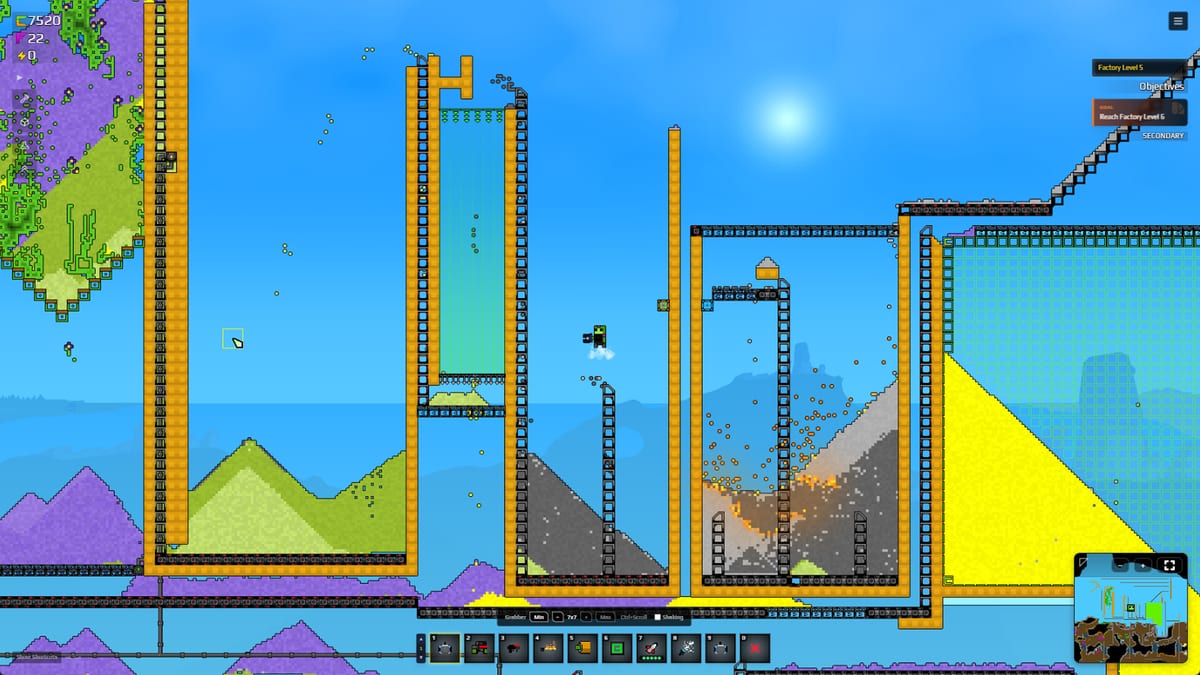
The Shaker is Sandustry’s entry into automated refining. Built on a diagonal frame with a mesh screen, it accepts Wet Sand only and outputs Gold plus Slag. Dry Sand on the screen does nothing, which catches new players who skip the wetting pool. Master the shaker and you master the game’s research economy.
Unlock and placement
Shakers arrive with early Refining research—often Refining 1 alongside basic logistics. Place them on stable ground with clear space below and to the sides for output piles or belts. Because the frame is diagonal, the footprint differs from flat buildings: leave one tile of run-off room so slag does not instantly bury the gold exit.
Elevated shakers work when Launchers feed the top intake and belts catch lower outputs. Avoid building directly over Water unless you intend a wetting pool beneath—accidental conversion can steal dry sand from your feed belt.
Input: Wet Sand feed angles
Gravity pulls material across the screen from the high corner to the low corner. Feed Wet Sand onto the upper intake tile so it spreads across the mesh. Vertical drops that land mid-screen often stack, blocking the next piece and starving gold output.
Pair shakers with a controlled wetting pool (Sand and Wet Sand) and a belt clocked to shaker consumption. One common demo layout: water pool → wet sand belt → shaker bank of two or three units → split outputs. Scale banks horizontally before stacking vertically—vertical stacks complicate slag removal.
Output: Gold and Slag splits
Community yield reports cluster around twenty to twenty-five percent Gold from Wet Sand input (Material Ratios). Slag takes the remainder. Gold is lighter than Slag on density charts, so separate collection lanes matter: a low-side slag belt and a high-side or mid-side gold chute reduces losses.
Route slag immediately toward burners for Burnt Slag (Gold and Slag). Slag backlog on the shaker output tile stops the machine silently—watch slag more than gold when debugging throughput.
Throughput and scaling
Shaker throughput equals Wet Sand delivered per tick, not raw sand mined. Doubling miners without doubling wetting yields idle shakers. Doubling shakers without wetting yields idle second machines. Track Wet Sand belt saturation as your KPI.
When scaling, mirror identical feed lengths so each shaker receives the same pile depth. Uneven belts cause one unit to hog input and others to starve—a subtle bug in mirrored blueprints with different path lengths.
Integration with logistics
Upstream: Conveyors and Launchers, water from Pipes and Pumps. Downstream: slag burn line, gold chest near research, optional Filters if wet sand contaminated dry sand. Mid-game adds parallel RedSand lines that do not use shakers (RedSand and Fluxite).
Maintenance and upgrades
Inspect shaker output tiles every few demo minutes while learning. Slag that sits one tile too long blocks gold even when input belts look full. A single extra slag chute tile downstream prevents cascading stalls across a bank of three shakers.
When research offers shaker-adjacent upgrades, prioritize output logistics before input speed—faster wet sand into a clogged output does not increase gold per minute.
Shaker bank layouts that survive scaling
Side-by-side diagonals with shared wet sand feed and split slag/gold exits scale cleanly to three units—mirror belt lengths so no shaker hogs input. Stacked rows look compact but slag removal becomes harder; use only when launchers can throw slag sideways to a wide burn pad. Leave one empty tile between banks for emergency X removal without dismantling the whole refinery. Test each new bank with sand before connecting gold chests so mis-angles do not contaminate stored research currency.
For research pacing after your first gold, read How to Get Gold and Research Priority Tier List. Other machines are cataloged on the Buildings Hub.
Frequently Asked Questions
Quick answers to the most common Sandustry questions.
Does the Shaker accept dry Sand?
No. Only Wet Sand refines into Gold and Slag. Build a wetting pool first—see [Sand and Wet Sand](/materials/sand-wet-sand/).
Why build the Shaker diagonally?
The diagonal screen uses gravity to separate materials across the mesh. Correct orientation sets intake high and outputs low on separate sides.
What yield should I expect?
Community tests report ~20–25% Gold from Wet Sand. Measure your line and compare on [Material Ratios](/materials/material-ratios/).
Why did my Shaker stop outputting Gold?
Usually slag blocking the output tile, dry sand feed, or empty wet sand belt. Clear slag to burners per [Gold and Slag](/materials/gold-slag/).
How many Shakers do I need?
Match shaker count to sustained Wet Sand throughput from your wetting line—not raw sand mine rate. Scale belts before adding units.